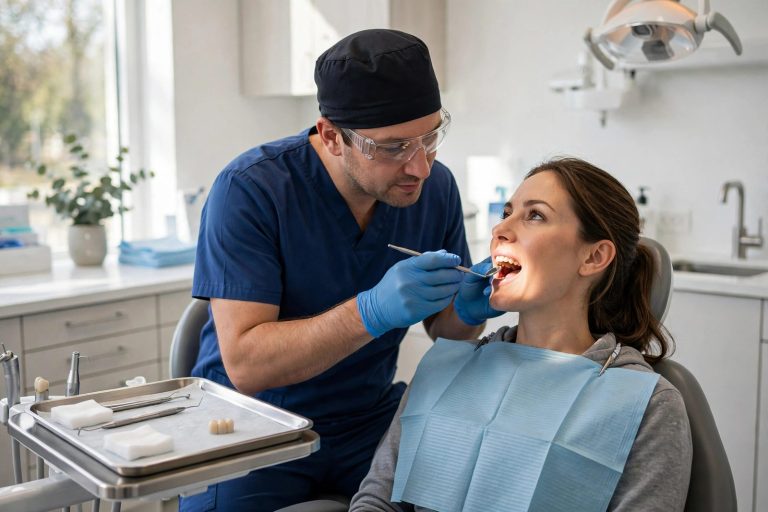
Dental Veneers: The Revival of Your Smile
Dental veneers are a highly demanded dental treatment famous for their impressive cosmetic effects and their quick, easy procedure. These tooth coverings are more than just a dental treatment; they are powerful tools that can conceal all your dental imperfections and offer you an impeccable set of pearl-white teeth. With dental veneers, you can rebuild your smile, boost your confidence, and start shining anew. At U Smile Dentistry, we proudly offer the Canadian Dental Care Plan to ensure you receive affordable, high-quality dental care. Do you feel insecure about your smile? Here, we will show you how to easily reach a perfect smile in a very short time.
What Are Dental Veneers?
Dental veneers are thin, tooth-colored dental covers that are designed to perfectly match the shape, color, size, and length of your natural teeth. These custom-made tooth coverings are used to make up for all the imperfections of your teeth, like chips, cracks, discoloration, and even their misalignments to give you a harmonious smile. Because of their excellent beautifying effects, dental veneers are mainly used for the front teeth. But their benefits are not limited to only their aesthetic appeal but they can also greatly promote your oral health and self-confidence. These tooth-colored veneers are easily bonded to your teeth and provide you with an improved look and feel in a couple of sessions. But depending on your teeth and the issue you wish to address, you may need different types of dental veneers. If you are looking for a way to improve the beauty of your teeth, you can choose dental veneers. To get dental veneers in Orangeville, just call (519) 307-6300. The Canadian Dental Association’s guide to bonding and veneers explains how veneers are made and what they can correct.
Different Types of Dental Veneers
There are different types of dental veneers available, from porcelain or laminated veneers to composite, non-prep, and snap-on veneers. Each type has different features and can be used for a variety of dental problems. But the choice of veneer type depends on various factors, such as the condition of your teeth, your budget considerations, and your personal preference. Also, knowing more about the pros and cons of each of these veneers can help you make a much better-informed decision about your treatment.
Porcelain Veneers
These kinds of veneers are wafer-thin, shell-like caps, the same color as your natural teeth. They are made after the dentist takes an impression of your teeth and sends it to the lab for the final custom-made tooth covers to be made. Just like other types of veneers, porcelain veneers are then attached to the surface of your tooth to hide their chips, cracks, or stains. However, as the name suggests, these veneers are made of porcelain, a highly resistant material that closely resembles natural tooth color. This makes porcelain veneers a more natural-looking and durable solution for your dental issues. Yet we should be aware of their different benefits and drawbacks to have a complete picture of these types of veneers. A chipped porcelain veneer usually cannot be patched invisibly and may need to be remade. 
Advantages of Porcelain Veneers
+ Natural Appearance
+ Stain Resistance
+ High Durability
+ Biocompatibility (safe for gums and other oral tissues)
+ Easy Maintenance
Disadvantages of Porcelain Veneers
– An Expensive Procedure
– Not Suitable for Severe Misalignments
– Not Reversible
– Potential for Damage
– Necessity for Replacement
Composite Veneers
Composite veneers are made of thin layers of composite resin material that are placed on the surface of your tooth to create a rather smooth and natural-looking appearance and cover up your dental flaws. These tooth-colored veneer materials need your teeth to be slightly shaved them to firmly attach to your teeth. So, these forms of veneers are considered more invasive than the other types. Also, composite veneer material is generally added and cured step-by-step by the dentist to create a more natural look and higher durability. Yet, with all that being said, composite veneers are done in just one dental visit, making them a quick solution for your pesky tooth stains, chips, and cracks. Composite veneers are built directly on the tooth, usually with little or no enamel removal, and small chips can often be repaired in the mouth.
Related Articles: Facts About Dental Veneers Read More: Cracked Teeth

Advantages of Composite Veneers
+ Cost-Effectiveness
+ Reparability
+ Single Visit Procedure
+ No Lab Processing Time
+ Reversible Procedure
Disadvantages of Composite Veneers
– Prone to Staining and Discoloration
– Less Durability
– Limited Strength
– Rough, Ragged Surface
– Not Suitable for Extensive Corrections
– Challenging to Repair
No-Prep Veneers
No-prep veneers are considered a new form of dental veneer treatment. These veneers have been developed to be almost non-invasive to the teeth and make up for this shortcoming in the other kinds of veneers. With no-prep veneers, the dentist will not need to grind down the surface of your tooth, and therefore, your teeth will be almost intact. This procedure has been made possible with the help of new technologies such as accurate 3D digital scanning. This helps ensure the final veneers fit comfortably and look natural. No-prep veneers require the dentist to make an impression of your teeth and then bond and adjust the final veneers on your defective teeeth. This means that you need to make at least two visits to the dental clinic. Also, you should keep in mind that even though the process of getting no-prep veneers is minimally invasive, the installation will, however, affect your teeth and the surface of your teeth will not be as smooth as before. 
Advantages of No-prep Veneers
+ Preserving Tooth Structure
+ Reversibility
+ Less Invasive
+ Faster Procedure
Disadvantages of No-prep Veneers
– Thinness and Durability
– Not Suitable for All Cases
– High Cost
– Less Shade Control
Related Articles: Dental Bonding Vs Veneers
Removable or Snap-on Veneers
Removable, clip-non, or snap-on veneers are a set of thin, custom-made dental covers that fit over your teeth and improve their shape, color, size, and alignment. The difference between these types of veneers and the other types is that snap-on veneers are not permanent, and you can easily remove them yourself. These veneers easily pop or “snap” on your original teeth and cover their cracks, chips, gaps, and other imperfections. Unlike permanent veneers, removable ones need no preparation or cementation, which makes them a good option for people who are not ready for a big, irreversible decision. Snap-on veneers also come in two different types: prefabricated and custom-made veneers. You have a very limited choice of either color, shape, or size when it comes to prefabricated veneers. However, you can make sure of a perfect fit for your custom-made removable veneers.
Read More: Orangeville Restorative Dentistry

Advantages of Removable Veneers
+ Being Non-Invasive
+ Affordability
+ Instant Transformation
+ No Pain or Discomfort
+ Easily Removable
+ Temporary Solution for Special Occasions
Disadvantages of Removable Veneers
– Limited Durability
– Speech and Eating Challenges
– Maintenance Challenges
– Not a Long-Term Solution
– Risk of Poor Fit
– May Feel Bulky
A note on removable and snap-on veneers: these are ready-made covers worn over the teeth, usually bought directly by the wearer rather than made and fitted by a dentist. They are not bonded to the teeth, are not a dental treatment, and cannot correct the condition or health of the teeth underneath. They can also trap plaque against the teeth if worn for long periods, irritate the gums, and let decay develop unnoticed on the teeth underneath. A dentist-made veneer, by contrast, is custom-made for your teeth, bonded in place, and planned as part of your dental care.
More Info: Emergency Dentist in Orangeville
Which Type of Veneers Is Better? Finally, the choice of the best type of dental veneers that suit your taste, expectations, and budget depends on various factors, and there is no one-size-fits-all solution. However having the benefits and drawbacks of each type of dental veneer in mind and consulting with a professional dentist can help you make your final decision. Before you start your treatment, you should decide which criteria are more important to you:
Your Cosmetic Goals: If you’re looking for a significant and long-lasting cosmetic improvement, porcelain veneers generally provide natural-looking, durable results.
Your Budget: If cost is a significant factor and you have budget limitations, composite veneers or removable veneers may be more affordable options.
Non-invasiveness of the Procedure: If you prefer a more conservative approach with minimal enamel removal, no-prep veneers or removable veneers may be more suitable for you.
Durability of Your Veneers: For the highly durable and stain-resistant option, dentists often recommend porcelain veneers.
Your Time: If you’re looking for a quick solution, composite veneers or removable veneers may offer faster results compared to the multiple visits required for porcelain or other custom-made veneers.
Do not forget that it’s crucial to consult with an experienced dentist who can assess your oral health, discuss your goals, and recommend the most suitable type of veneer for your specific situation. So, if you are still hesitant about the type of veneers you need, our team of skilled dentists at U Smile Dentistry is here to help. In our dental clinic in Orangeville, we use modern equipment and employ the latest trends in cosmetic dentistry to make sure your veneers are exactly what you’ve had in mind. Take the first step towards your dream smile today. You can verify any Ontario dentist’s registration through the Royal College of Dental Surgeons of Ontario’s public register.
More Info: Root Canal in Orangeville
What are the main types of dental veneers?
How long do porcelain and composite veneers last?
Do veneers damage your teeth?
Can veneers be repaired if they chip?
Are snap-on veneers a good alternative to veneers?
This article is general information only and is not medical advice. Your own dentist can advise you based on your situation.