
Emergency Dentist in Orangeville, ON
If you’re dealing with tooth pain, swelling, a broken tooth or a lost filling in Orangeville, call U Smile Dentistry at (519) 307-6300 and tell us what happened — when it started, whether it’s getting worse, and whether you’ve had a recent injury. We’ll advise you on the soonest available appointment and what to do in the meantime. Same-day emergency appointments are available on the days we are open. CDCP patients are welcome here for emergency care: for covered services we bill the plan directly at its established fees, with no balance billing, so call ahead and the team will confirm your coverage before your visit.
Difficulty breathing or swallowing, rapidly spreading swelling or severe bleeding requires emergency medical care. Call 911 when necessary. For dental concerns, request an urgent dental appointment; availability and treatment depend on assessment. Emergency dental care at U Smile Dentistry is provided by general dentists registered with the Royal College of Dental Surgeons of Ontario (RCDSO). Treatment suitability is determined through an individual dental assessment.
For an emergency dentist in Orangeville, call U Smile Dentistry at (519) 307-6300. Tell us what happened, which tooth is affected and when the symptoms started, and we will advise on the soonest available urgent appointment.
(519) 307-6300
When to See an Emergency Dentist
Some problems shouldn’t wait for a routine check-up. Call us if you have significant or persistent tooth pain, swelling in your face or gums, bleeding that won’t stop, or signs of infection such as a bad taste or a small bump on the gum — or if a tooth has been knocked out, cracked or badly chipped. A lost filling, a damaged crown or a chipped tooth that’s painful or sensitive also needs prompt advice: call and describe what’s happened rather than waiting to see whether it settles.
What happens next depends on what the examination finds. Deep, throbbing pain that keeps you awake often points to the tooth’s nerve, and root canal treatment may be how the tooth is saved. A broken tooth can often be rebuilt with a filling or a dental crown; if a tooth is too damaged to save, tooth extraction may be the safest option. The assessment always comes first, and we’ll explain the options before anything is done. Tell us about changes in your health, the medicines you take and any recent dental work, because all of it shapes what’s safe. And if swelling keeps spreading, don’t wait — read about the warning signs of a tooth infection and why it should never be left untreated.
How Your Emergency Dentist Assesses the Problem
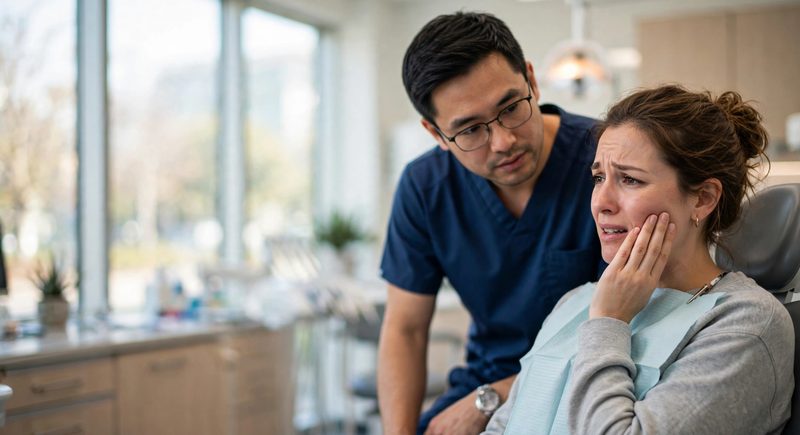
When you arrive, the dentist examines the tooth and the area around it, asks when the pain started and what makes it better or worse, and takes X-rays if they’re needed to see what’s happening below the surface. Only then do we talk about treatment — whether the tooth can be repaired, whether the nerve needs treating, or whether removing the tooth is the safer course. You’ll know the plan, and what it involves, before treatment starts.
If dental anxiety is part of what’s kept you from getting care, tell us when you call. U Smile Dentistry is licensed to provide IV sedation, which we arrange in dedicated sessions — for some emergency patients, it’s what makes treatment possible. Sedation is planned with the team in advance rather than added on the spot, so mention it on the phone and we’ll explain how the scheduling works.
Severe or persistent tooth pain may be a sign of a problem that needs prompt dental assessment. Contact U Smile Dentistry so the dental team can evaluate your symptoms and recommend the appropriate next step.
Swelling in the gums, face or jaw can sometimes be associated with a dental infection or another urgent problem. Contact the clinic for guidance, especially if the swelling is increasing or accompanied by significant pain.
A knocked-out tooth or a tooth that is badly broken should be assessed as soon as possible. Contact U Smile Dentistry promptly so the dental team can advise you on what to do next and whether urgent treatment is needed.
A lost filling, crown or other dental restoration may leave the tooth sensitive or vulnerable to further damage. Contact the clinic so the dental team can assess the problem and advise you on the appropriate timing for care.
If a tooth, gum or other part of your mouth has been injured, a dental assessment can help determine the extent of the damage and the appropriate treatment. Contact U Smile Dentistry for guidance on the next step.
Bleeding from the mouth that does not stop may need urgent assessment. Contact U Smile Dentistry for guidance, and seek emergency medical care if the bleeding is severe or you are having difficulty breathing or swallowing.
Some dental problems are urgent, while others can safely wait for a regular appointment. If you are unsure, contact U Smile Dentistry and describe your symptoms so the dental team can help you understand the appropriate next step.
Have Any Questions?
Contact us for all your questions before beginning your journey
What to Do Before Your Emergency Dental Visit
Call your emergency dentist before coming in so the team can advise you on timing and what to bring. Have your medication list and any relevant dental records available. Avoid putting aspirin or other medication directly on the tooth or gums.
If a tooth has been knocked out, handle it by the crown rather than the root and seek prompt dental advice. Keep a detached crown or filling to bring to your visit; do not use household glue. Difficulty breathing or swallowing, rapidly spreading swelling or severe bleeding needs emergency medical care; call 911 when necessary.

Need Urgent Dental Care in Orangeville?
Contact U Smile Dentistry to describe your symptoms and request an urgent dental appointment. Assessment determines which treatment is appropriate; an emergency visit does not automatically mean a tooth needs to be removed. When a tooth cannot be saved, emergency tooth extraction may be the safest option — the assessment always comes first.
Our hours: Monday 11:00 a.m.–8:00 p.m. · Tuesday 10:00 a.m.–5:00 p.m. · Wednesday — phone only · Thursday 11:00 a.m.–8:00 p.m. · Friday 10:00 a.m.–5:00 p.m. · Saturday 10:00 a.m.–5:00 p.m. · Sunday — closed. We are not a 24-hour clinic: if you have difficulty breathing or swallowing, swelling that is spreading quickly, or severe bleeding, call 911 or go to the hospital emergency department.
Emergency Dental Care: Patient Questions
Can tooth pain wait until a regular check-up?
Persistent or severe pain needs timely assessment. Call the clinic, describe when it started and mention swelling, injury or changes in your health.
Do I need an extraction if a tooth is broken?
Not necessarily. Depending on the damage, a filling, crown or root canal treatment may be considered. The dentist must examine the tooth before recommending an option.
What should I do about a lost filling or crown?
Contact the clinic and explain whether you have pain or sensitivity. Keep a detached restoration if you have it and bring it to the appointment; do not use household glue.
When should I seek emergency medical help?
Difficulty breathing or swallowing, rapidly spreading swelling or severe bleeding requires emergency medical care. Call 911 when necessary rather than waiting for a dental appointment.
Can CDCP cover an emergency dental visit?
Yes, in many cases. The CDCP may cover eligible emergency examinations and certain treatments, depending on your coverage, the services required and the plan’s clinical criteria — some treatments require preauthorization first, and it doesn’t cover every procedure. At U Smile Dentistry we bill the CDCP directly at the plan’s established fees for eligible services, with no balance billing; depending on your coverage and the services required, a co-payment or other applicable amount may still be your responsibility. Call us before your visit and we’ll explain the billing process and confirm your coverage. You can also read the official covered-services information and our CDCP information before you come in.
What should I do if a tooth is knocked out?
Touch only the crown of the tooth, not the root, and keep it moist. If you can, gently place it back in its socket; otherwise keep it in milk or inside your cheek. Then contact the clinic right away — a knocked-out tooth has the best chance of being saved when it is assessed as soon as possible.
What should I do if a dental emergency happens when you’re closed?
First, check whether it’s a medical emergency: difficulty breathing or swallowing, swelling that is spreading quickly, or bleeding that won’t stop means calling 911 or going to the hospital emergency department, at any hour. For a painful but stable problem — a lost filling, a chipped tooth, a dull ache — keep the area clean, keep any piece that has come off, and call us at (519) 307-6300 as soon as we reopen; we’re closed on Sundays, and Wednesdays are phone-only. A knocked-out tooth is the exception: it has the best chance of being saved when it’s seen quickly, so follow the knocked-out-tooth steps above and call us the moment the clinic opens.
I’m anxious about dental treatment. Is sedation available for emergency care?
It can be. U Smile Dentistry is licensed to provide IV sedation, which we arrange in dedicated sessions. Sedation is planned in advance with the team rather than added on the spot, so if anxiety would make emergency treatment hard for you, mention it when you call — we’ll explain how sedation scheduling works and whether it fits your situation. Not every emergency procedure needs it, and the assessment comes first either way.
Depending on assessment, related care may include root canal treatment, a filling or tooth extraction. Contact the clinic for appointment guidance.
For more on dental emergencies and dental care in Ontario, see the Ontario Dental Association, the Canadian Dental Association and the Royal College of Dental Surgeons of Ontario.