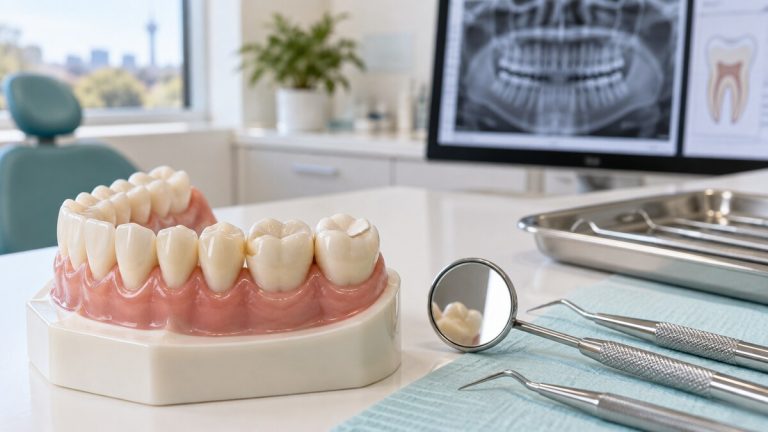
Dental amalgam fillings, sometimes called silver fillings, are restorations made from a mixture of metals that includes mercury, silver, copper and tin. They have been used for many years to restore teeth affected by decay, particularly teeth that experience substantial chewing forces.
Questions about amalgam often focus on three issues: how durable the material is, whether the mercury it contains is considered safe, and whether an existing amalgam filling should be replaced with another material.
There is no single filling material that is appropriate for every tooth or every patient. The choice depends on the location and size of the cavity, the amount of healthy tooth structure remaining, moisture control, appearance preferences, medical history, bite forces and other clinical factors.
| Question | Short Answer |
| What is dental amalgam? | A direct restorative material made from mercury combined with metals such as silver, copper and tin. |
| Is amalgam considered safe? | Health Canada states that current evidence does not indicate dental amalgam causes illness in the general population, while recommending precautions for certain patients. |
| Should healthy amalgam fillings be removed? | Health Canada does not recommend routine removal of sound amalgam fillings in patients without a clinical reason for replacement. |
| How long do amalgam fillings last? | There is no fixed lifespan. Longevity depends on the size and location of the filling, bite forces, recurrent decay, tooth condition and other factors. |
| Are alternatives available? | Yes. Composite resin and other restorative materials may be considered depending on the tooth and clinical situation. |
What Are Dental Amalgam Fillings?
Dental amalgam is a direct filling material used to restore tooth structure lost to decay or damage.
The material is produced by combining mercury with an alloy powder containing metals such as silver, copper and tin. Mercury makes up approximately half of conventional dental amalgam by weight and binds the other metals together to form the restoration.
The Canadian Dental Association describes amalgam as a long-lasting and relatively affordable restorative material that has traditionally been used particularly for posterior teeth.
If you want to compare amalgam with other materials, see our guide to the different types of dental fillings.
Are Dental Amalgam Fillings Safe?
For most people, current Canadian guidance does not identify dental amalgam as a cause of illness.
Health Canada’s position on dental amalgam, which notes that an updated 2020 risk assessment affirmed its recommendations, states that amalgam contributes measurable mercury exposure but that the evidence does not indicate this exposure is causing illness in the general population.
The Canadian Dental Association also states that current scientific evidence supports dental amalgam as an effective and safe restorative material for a range of clinical situations.
That does not mean amalgam is appropriate for every person or every tooth. Health Canada recommends specific precautions for certain patients and encourages dentists to provide enough information for patients to make an informed choice about restorative materials.
Why Does Amalgam Contain Mercury?
Mercury is used because it combines with the other metals in the amalgam alloy and allows the material to be packed and shaped into a prepared tooth before it sets.
Small amounts of mercury vapour can be released from an amalgam restoration, including during chewing and particularly during placement or removal. This is why questions about mercury exposure are part of the discussion around amalgam.
Health Canada distinguishes between detectable mercury exposure and exposure known to cause mercury poisoning. Its assessment does not support routine removal of sound amalgam fillings solely to reduce mercury exposure in the general population.
Who Should Use Extra Caution With Amalgam?
Health Canada recommends additional caution or alternative materials in certain circumstances.
- Pregnancy: Whenever possible, Health Canada recommends avoiding placement or removal of amalgam fillings during pregnancy.
- Impaired kidney function: Health Canada advises against placing amalgam in patients with impaired kidney function.
- Mercury hypersensitivity: Patients with a documented allergy or hypersensitivity to mercury should discuss alternative materials with their healthcare providers.
- Primary teeth: Health Canada recommends considering non-mercury materials for children’s primary teeth when an alternative has suitable mechanical properties.
Your medical history, the tooth being treated and the available alternatives should be reviewed before a restorative material is selected.
What Are the Advantages of Amalgam Fillings?
Amalgam remains relevant in restorative dentistry because it has several practical characteristics.
- Durability: Amalgam can provide long service in appropriate clinical situations.
- Strength under chewing forces: It has traditionally been used in posterior teeth where restorations may experience substantial biting pressure.
- Direct placement: The restoration can generally be placed directly in the tooth rather than fabricated by a dental laboratory.
- Less technique-sensitive moisture control than some alternatives: This can be useful in certain clinical situations where maintaining a completely dry field is difficult.
- Cost: Amalgam may be less expensive than some alternative restorative options, although actual fees depend on the treatment being performed.
What Are the Disadvantages of Amalgam Fillings?
Amalgam also has limitations that should be considered when comparing restorative materials.
- Appearance: The silver-grey colour is visibly different from natural tooth enamel.
- Mercury content: Although current Canadian guidance does not identify amalgam as causing illness in the general population, mercury exposure and individual medical considerations remain relevant to material selection.
- Mechanical retention: Unlike adhesive composite materials, traditional amalgam does not bond to enamel and dentin in the same way. The tooth preparation may therefore require a shape that mechanically retains the restoration.
- Existing tooth condition: Large restorations leave less natural tooth structure, and teeth with extensive restorations may be more susceptible to fracture regardless of the restorative material.
- Environmental considerations: Mercury-containing dental waste requires appropriate handling and disposal procedures.
Amalgam vs Composite Fillings: What Is the Difference?
| Factor | Amalgam | Composite Resin |
| Appearance | Silver-grey | Can be matched more closely to tooth colour |
| Bonding | Traditional preparations rely largely on mechanical retention | Adhesively bonded to prepared tooth structure |
| Moisture control | Generally more tolerant of some moisture during placement | Usually requires effective moisture control for predictable bonding |
| Clinical use | Historically common in posterior load-bearing restorations | Used in anterior and posterior teeth depending on the case |
| Material choice | The appropriate material depends on cavity size and location, remaining tooth structure, bite, moisture control, appearance preferences and other clinical factors. | |
Neither material is automatically the best choice in every situation. Your dentist can explain the advantages, limitations and alternatives that apply to the specific tooth being restored.
How Is an Amalgam Filling Placed?
The exact procedure depends on the tooth and size of the cavity, but treatment generally involves removing decayed or weakened tooth structure and preparing the tooth to receive the restoration.
The amalgam material is mixed, placed into the prepared area, condensed and shaped to reproduce the appropriate tooth anatomy and bite.
Unlike light-cured composite resin, traditional dental amalgam does not require a dental curing light to harden. It sets through a chemical reaction between the mercury and the other components of the alloy.
After the restoration is placed, the dentist checks the shape and bite and provides any relevant post-treatment instructions.
Should Old Amalgam Fillings Be Removed?
Not simply because they contain mercury.
Health Canada does not recommend wholesale or routine removal of sound amalgam restorations in people who do not have clinical indications for replacement.
Removing a restoration also removes additional tooth structure and temporarily increases exposure to mercury vapour during the removal procedure. For those reasons, replacement should be based on the condition of the filling and tooth rather than the presence of amalgam alone.
A dentist may consider replacement when there is a clinical reason such as:
- Decay developing around or beneath the restoration
- A fractured or significantly damaged filling
- A crack or fracture involving the tooth
- Loss of an effective seal or other evidence that the restoration is failing
- A documented material hypersensitivity requiring an alternative
- Another treatment plan that requires replacement of the existing restoration
How Are Amalgam Fillings Removed?
When an amalgam restoration needs to be replaced for a clinical reason, the dentist uses rotary instruments to remove the restoration and assess the tooth underneath.
Health Canada recommends that dental professionals use appropriate techniques and equipment during amalgam placement and removal to reduce exposure to mercury vapour and manage amalgam waste properly.
After the filling is removed, the dentist determines whether the remaining tooth can be restored with a direct filling or whether another restorative option should be considered.
Have an Old Filling or a New Cavity?
U Smile Dentistry can assess the tooth, existing restoration and surrounding tissues and discuss the restorative options that may be appropriate for your individual needs.
How Long Do Amalgam Fillings Last?
There is no reliable fixed number of years that applies to every amalgam restoration.
Amalgam is considered a durable restorative material, but the lifespan of an individual filling depends on factors such as:
- The size and location of the restoration
- The amount of healthy tooth structure remaining
- Bite and chewing forces
- Grinding or clenching habits
- Recurrent decay around the restoration
- Cracks or fractures in the tooth or filling
- Oral hygiene and dietary habits
A filling should be assessed based on its current clinical condition rather than replaced automatically because it has reached a particular age.
How Can You Tell If an Amalgam Filling Is Failing?
Some failing restorations cause symptoms, while others are identified during a dental examination or on dental X-rays when imaging is clinically appropriate.
Reasons to have a filling assessed include:
- New or persistent pain in the tooth
- Pain when biting or chewing
- A visible crack or missing portion of the filling
- A fractured tooth around the restoration
- Food repeatedly collecting around the filling
- New sensitivity that does not resolve
These symptoms are not specific to amalgam and can occur with other restorative materials as well. A dental examination is needed to determine the actual cause.
What Are the Alternatives to Amalgam Fillings?
Alternative restorative materials and treatments may include composite resin fillings, glass ionomer materials and, for teeth requiring more extensive restoration, indirect restorations such as inlays, onlays or crowns.
The alternatives are not interchangeable in every situation. The amount of remaining tooth structure, cavity location, bite forces, ability to isolate the tooth and expected size of the restoration influence the treatment decision.
For smaller or moderate areas of decay, learn more about dental fillings in Orangeville.
Does the Canadian Dental Care Plan Cover Amalgam Fillings?
The Canadian Dental Care Plan covers eligible restorative services, including permanent and temporary fillings, subject to the program’s clinical criteria, frequency limits and billing rules.
Under the current CDCP Dental Benefits Guide, amalgam and composite restoration procedure codes are included within restorative coverage. For permanent teeth, restoration eligibility is generally once per tooth surface in any 24-month period.
The amount paid by the CDCP depends on the service, the applicable CDCP-established fee and the patient’s coverage level. Coverage should be confirmed for the individual treatment plan rather than assuming every filling will have the same patient cost.
For more information about the program, see our Canadian Dental Care Plan guide.
How Much Does an Amalgam Filling Cost?
There is no single fee that applies to every amalgam filling.
The cost of a dental restoration can depend on the tooth being treated, the number of surfaces involved, the size and complexity of the restoration, the material selected and whether other treatment is required.
Private insurance and the CDCP may contribute toward eligible restorative services according to their own rules and fee schedules.
A written treatment estimate is more useful than relying on a generic online price because it identifies the specific tooth, procedure and expected patient portion.
Should You Choose Amalgam or Another Filling Material?
The decision should be based on the tooth and your individual circumstances rather than choosing a material solely because it is described as newer, stronger or more natural-looking.
Questions worth discussing with your dentist include:
- How large is the cavity or existing restoration?
- How much healthy tooth structure remains?
- Is the tooth in a visible area?
- Can the tooth be kept sufficiently dry for an adhesive restoration?
- Are there medical factors that affect material selection?
- What are the advantages and limitations of the available materials for this tooth?
- What maintenance or future treatment could each option require?
- What is included in the treatment estimate?
Dental Fillings in Orangeville
U Smile Dentistry provides restorative dental care in Orangeville for patients with cavities, damaged fillings and other restorative concerns.
A dentist can examine the affected tooth, assess any existing restoration and discuss the filling or restorative options that may be appropriate for your situation.
Contact U Smile Dentistry at (519) 307-6300 or request an appointment online.
FAQs About Dental Amalgam Fillings
Are dental amalgam fillings safe?
Health Canada states that current evidence does not indicate dental amalgam is causing illness in the general population. However, it recommends precautions for certain patients, including pregnant people, individuals with impaired kidney function and people with mercury hypersensitivity.
Should old amalgam fillings be removed because they contain mercury?
Not routinely. Health Canada does not recommend wholesale removal of sound amalgam fillings in patients without a clinical indication for replacement. A filling may need replacement if it is damaged, associated with recurrent decay, contributing to a fractured tooth or requires replacement for another clinical reason.
How long do amalgam fillings last?
There is no fixed lifespan that applies to every amalgam filling. Longevity depends on factors such as restoration size and location, remaining tooth structure, bite forces, recurrent decay, grinding habits and the condition of the tooth.
Is composite better than amalgam?
Neither material is automatically better for every tooth. Composite offers a tooth-coloured appearance and adhesive bonding, while amalgam has historically been valued for durability and tolerance of certain placement conditions. The appropriate material depends on the individual tooth and clinical situation.
Does the CDCP cover amalgam fillings?
The Canadian Dental Care Plan covers eligible restorative services and includes amalgam and composite restoration procedure codes. Coverage is subject to program criteria, frequency limits, CDCP-established fees and the patient’s coverage level.
Does amalgam harden with a curing light?
No. Traditional dental amalgam sets through a chemical reaction between mercury and the other metals in the alloy. Unlike many composite resin restorations, it does not require a dental curing light to harden.