

Straightening your teeth without brackets and wires sounds simple — and for the right person, clear aligners are a genuinely convenient way to do it. But “the right person” is doing real work in that sentence. Clear aligners can fix a lot of common alignment problems, and there are some they honestly can’t — and the difference isn’t about how much you want them. It’s about your bite, how much your teeth need to move, the health of your gums, and whether you can actually wear the trays as much as the treatment requires.
This guide is a self-screening tool for a clear aligner candidate in Orangeville: the problems aligners handle well, the cases that usually need braces or other treatment first, and what an assessment at U Smile Dentistry checks before anyone says yes or no. It won’t qualify or disqualify you — only an in-person assessment can do that — but it will tell you what the honest questions are, so you can ask them.
- What “Candidacy” Actually Means for Clear Aligners
- The Bite and Crowding Problems Aligners Handle Well
- Cases That Usually Need Braces or a Different Plan First
- Health and Habit Factors: Gum Health, Wear-Time Honesty and Smoking
- What the Assessment at U Smile Checks
- Clear Aligners vs Braces — an Honest Comparison
- A Note on Brand Names — Why We Say “Clear Aligners”
- What Happens If You’re Not a Candidate Yet
- References
- Frequently Asked Questions About Clear Aligner Candidacy
What “Candidacy” Actually Means for Clear Aligners
Clear aligners are a series of custom-made, removable transparent trays. You wear each set for a planned period — often one to two weeks — and each set moves your teeth a small amount, step by step, toward the final position in your treatment plan. If you’d like the full picture of how the treatment itself works, start with our page on clear aligner treatment in Orangeville; this guide focuses on the question that comes first: whether aligners fit your teeth, your bite and your life.
“Candidacy” is a clinical judgement, and it has three parts. First, the mechanics: can trays — which grip the teeth and push them along planned paths — produce the movements your case needs? Second, the foundation: are your teeth and gums healthy enough to move safely? Third, the human part: aligners only work while they’re in your mouth, so candidacy also depends on whether the daily wear the treatment needs is realistic for you. A “yes” needs all three.
The Bite and Crowding Problems Aligners Handle Well
Clear aligners are at their best with mild to moderate problems, including:
• Mild to moderate crowding — teeth that overlap or sit slightly rotated because there isn’t quite enough room.
• Gaps and spacing — spaces between teeth that can be closed by moving teeth together.
• Some bite problems — many overbites, and some underbites and crossbites, can be improved when the problem is mainly in how the teeth meet rather than in the size or position of the jaws themselves.
• Relapse after braces — teeth that have shifted since earlier orthodontic treatment are often good candidates, because the movements needed are usually small.
Many plans also use small tooth-coloured attachments bonded to some teeth, which give the trays something to grip for trickier movements. Their presence doesn’t mean your case is severe — they’re a normal part of many straightforward plans. If a question about day-to-day treatment comes up as you read — how eating, cleaning or tray changes work — our post with answers to common clear aligner questions covers the practical side.
Cases That Usually Need Braces or a Different Plan First
Being told aligners aren’t the right tool is not a sales tactic in either direction — some movements are simply beyond what a removable tray can do reliably:
• Severe crowding or teeth that need to be removed to make room — cases where controlled, anchored movement matters most.
• Bite problems rooted in the jaws — a large mismatch between upper and lower jaw size or position is skeletal, and trays move teeth, not jaws. These cases may need braces, other appliances, or a specialist orthodontist’s care.
• Teeth that need to move in ways trays do poorly — large rotations of rounded teeth such as canines and premolars, teeth that need to be pulled down into line (extrusion), or teeth that must be uprighted from a strong tilt.
• Complex mouths — several missing teeth, bridges or implants that can’t move (an implant is fused to the bone and stays where it is — aligners can move the teeth around it, not the implant itself).
• Active dental disease — untreated cavities or gum disease must be treated before any orthodontic movement. Moving teeth through inflamed gums can make gum problems worse, so the honest order is: get healthy first, then straighten.
Sometimes the right answer is a combined plan — braces for the hard movements, for example, or treatment in stages. And sometimes it’s a referral: U Smile’s dentists are general dentists, and if your case is better handled by a specialist orthodontist, we’ll tell you that plainly.
Health and Habit Factors: Gum Health, Wear-Time Honesty and Smoking
Three factors outside your bite diagram decide a lot of candidacy assessments:
• Gum health. Your gums and the bone under them are the foundation every tooth movement stands on. Healthy gums and good day-to-day cleaning are prerequisites, not extras.
• Wear-time honesty. Aligners are typically worn 20 to 22 hours a day — removed for meals, for drinks other than water, and for brushing and flossing. That number is the treatment. Wearing trays only at night, or “most days”, stretches the plan out, lets teeth drift back between wears, and is the most common reason aligner treatment disappoints. If 20–22 hours honestly doesn’t fit your life right now, that’s a real candidacy answer — and it’s better learned before treatment than during it.
• Smoking and vaping. Smoking affects gum health and healing, and trays worn over smoking breaks pick up staining and odour. It’s part of the assessment conversation, not a footnote.
None of these are character judgements. They’re the same factors your dentist will weigh, and naming them here lets you walk into an assessment already knowing the discussion.
What the Assessment at U Smile Checks
An aligner assessment at U Smile Dentistry is an examination, not a commitment. It typically includes:
• A look at your teeth and bite — how they meet, where the crowding or spacing is, and how much movement each tooth would need.
• The health check: gums, existing fillings and crowns, any cavities or wear that should be dealt with first.
• Records such as X-rays and images or scans of your teeth, so movement can be planned against your actual roots and bone, not just the visible crowns.
• The lifestyle conversation — wear time, work and school routines, and whether the discipline of the treatment fits.
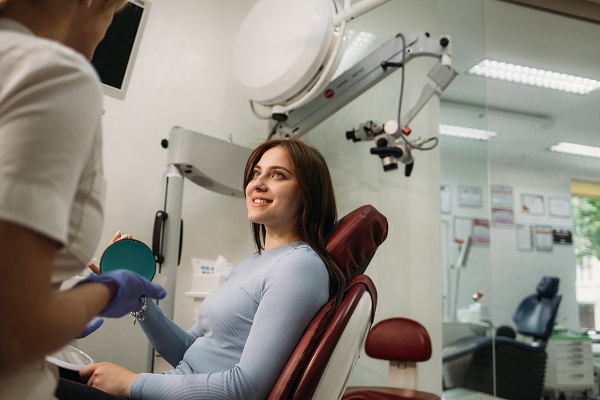
From that, your dentist can say whether you are a clear aligner candidate in Orangeville, whether something else should come first, or whether braces or a specialist referral would serve you better. If aligners are recommended, you’ll see what the plan involves — including how long it’s expected to take and what it costs — before you decide anything.
Clear Aligners vs Braces — an Honest Comparison
Neither option is “better” in general; they’re better at different things. Braces are fixed to the teeth, so they work around the clock without depending on memory or willpower, and they can deliver the more difficult movements listed above. Aligners are removable and hard to see, eating and brushing are simpler because the trays come out, and there are no brackets to catch on your cheeks — but they only work while worn, and some movements are slower or less predictable with trays.
For a straightforward case in a disciplined adult, aligners are often the simpler experience. For a complex bite, a teenager still growing, or anyone who knows a removable appliance will spend too much time in its case, braces may honestly be the stronger plan. Our page on braces and orthodontic care explains the braces side in full.
A Note on Brand Names — Why We Say “Clear Aligners”
You may well have started your search using a brand name — a lot of patients do, because one brand name has become shorthand for the whole category, the way people use a single word for tissues or bandages. We use the plain description “clear aligners” on purpose: it’s the treatment itself, not a label. What matters for your result is the assessment, the plan, and whether you wear the trays as directed — and those are the things we’ll discuss with you, whatever words you arrived with. One of the questions in the FAQ below addresses the brand question directly, because patients ask it directly.
What Happens If You’re Not a Candidate Yet
“Not yet” is the most common version of “no”, and it usually comes with a path: treat the gum disease or cavities first and reassess; handle the one movement aligners can’t do, then reconsider; or choose braces for this round of treatment and keep the result with a retainer afterwards. What you won’t get from us is aligners sold to a case they can’t fix — a failed aligner plan costs you the same months a correct plan would have, with nothing to show for them.
And whichever way the assessment goes, one commitment applies to every successful straightening, with aligners or braces: retainers afterwards. Teeth keep a memory of where they used to sit, and without retainers they drift back — sometimes within months. If you straighten your teeth, plan on wearing retainers as directed for as long as you want the result to last, which in practice means ongoing night-time wear.
If you’d like to find out where your own teeth stand, call U Smile Dentistry at (519) 307-6300 or book an aligner assessment — an honest answer, including “not yet”, is the useful outcome.
References
The guidance in this article reflects Canadian dental practice and patient-education resources from the Ontario Dental Association, the Canadian Dental Association and the Royal College of Dental Surgeons of Ontario (RCDSO). Dentists in Ontario are licensed by the RCDSO, and patients can verify a dentist’s registration on the RCDSO website.
Frequently Asked Questions About Clear Aligner Candidacy
Can clear aligners fix an overbite?
Often, yes — within limits. Many overbites are caused mainly by the angle and position of the teeth, and aligners can improve those cases by moving the teeth into a better relationship. An overbite that comes from the jaws themselves — a lower jaw that sits well behind the upper — is a skeletal problem, and trays cannot change jaw size or position. Those cases may need braces, other appliances, or a specialist orthodontist. Your assessment measures how much of your overbite is teeth and how much is jaw, and that measurement drives the honest answer.
I’m a teenager / my teen wants aligners — is that OK?
It can be, and age alone doesn’t decide it. Two things matter most: growing patients need most of their permanent teeth in place before a plan is built, and the wear discipline has to be real — 20 to 22 hours a day, every day, through school, sports and everything else. Some teens are excellent at it; others honestly aren’t yet, and for them braces remove the daily decision entirely, which protects both the result and your money. An assessment looks at your teen’s teeth, growth and habits together — and if the honest answer is “braces now, aligners later if wanted”, that’s a good answer, not a failed one.
Do I have to wear them 22 hours a day, really?
Really — the standard recommendation is 20 to 22 hours a day, and it isn’t padding. Each tray is shaped for a small step toward the final position, and teeth only move while the tray is on them. Wear them less and two things happen: the steps stop tracking (the next tray fits poorly or not at all), and teeth begin drifting back during the hours the trays are out. The hours out are for eating, drinking anything other than water, and brushing and flossing — which is a workable routine for most people, but it does ask for consistency. If that schedule genuinely doesn’t fit your life right now, say so at the assessment; a plan you can keep beats a plan you can’t.
Does the CDCP cover clear aligners?
No. The Canadian Dental Care Plan (CDCP) does not cover orthodontic treatment, and clear aligners are orthodontics — so aligner treatment is a private expense whether or not you are a CDCP patient. The CDCP does cover other care for eligible patients, such as exams, cleanings, fillings and dentures, and our team can explain how your eligibility affects the rest of your dental care. But no part of an aligner plan should be budgeted around CDCP coverage, because that coverage isn’t there.
Are clear aligners the same as Invisalign?
Invisalign is one well-known brand of clear aligners, and many patients search by that name. U Smile Dentistry does not use the Invisalign brand; we provide clear aligner treatment, and your assessment confirms which approach suits your teeth and bite.
How long does clear aligner treatment usually take?
It depends on how much movement your case needs. A small correction — a few mildly crowded or spaced front teeth, or relapse after earlier braces — can take a matter of months. Larger movements and bite corrections take longer, sometimes well over a year, and the timeline assumes the trays are worn as directed; missed wear stretches the calendar. Some plans also include a refinement stage — a short extra series of trays at the end to fine-tune the last details — which is a normal part of treatment, not a sign something went wrong. Your assessment produces a planned timeline for your specific teeth rather than a generic range.
Can I eat and drink with my aligners in?
Eat with them out — always. Chewing with trays in can crack or warp them and traps food against your teeth. Drinks are a softer rule with hard edges: water is fine any time, but anything hot can distort the plastic, and anything with sugar or acid — juice, pop, sweetened coffee — gets trapped between tray and tooth and bathes your teeth in it, which invites cavities. The routine is simple: trays out to eat or drink anything but water, brush (or at minimum rinse well) before the trays go back in, and clean the trays themselves as directed. It’s a habit most patients settle into within the first week or two.
What if I’m told I’m not a candidate?
Then you’ve learned something worth knowing before spending anything — and “not a candidate for aligners” is not “nothing can be done”. Depending on the reason, the path might be treating gum disease or cavities and reassessing, choosing braces for movements aligners can’t make, a staged plan, or a referral to a specialist orthodontist for a complex bite. The section above walks through the common versions. What we won’t do is reshape the recommendation to fit the appliance we happen to be discussing — the recommendation follows your teeth, not the other way around.
Will I need retainers after clear aligner treatment?
Yes — everyone does, after aligners and after braces alike. Teeth are held in place by fibres and bone that remodel slowly, and for a long time after treatment they tend to drift back toward their old positions. A retainer holds them while everything settles, and ongoing night-time wear is what protects the result long-term. Think of the retainer as part of the treatment, not an optional extra — and factor it into your decision, because straightening without retaining usually means paying to straighten twice.


