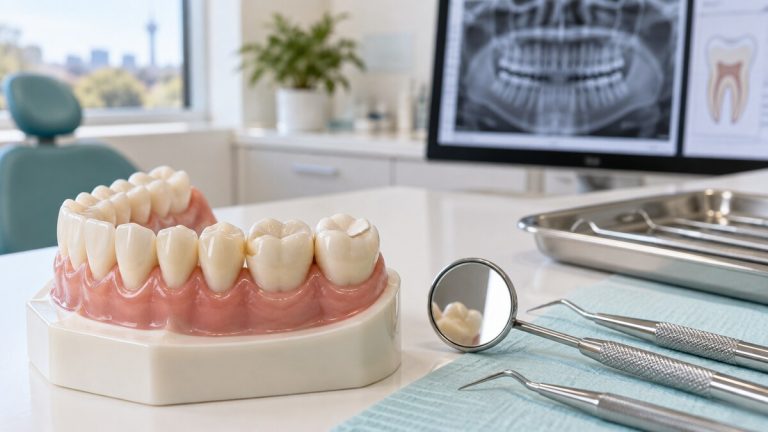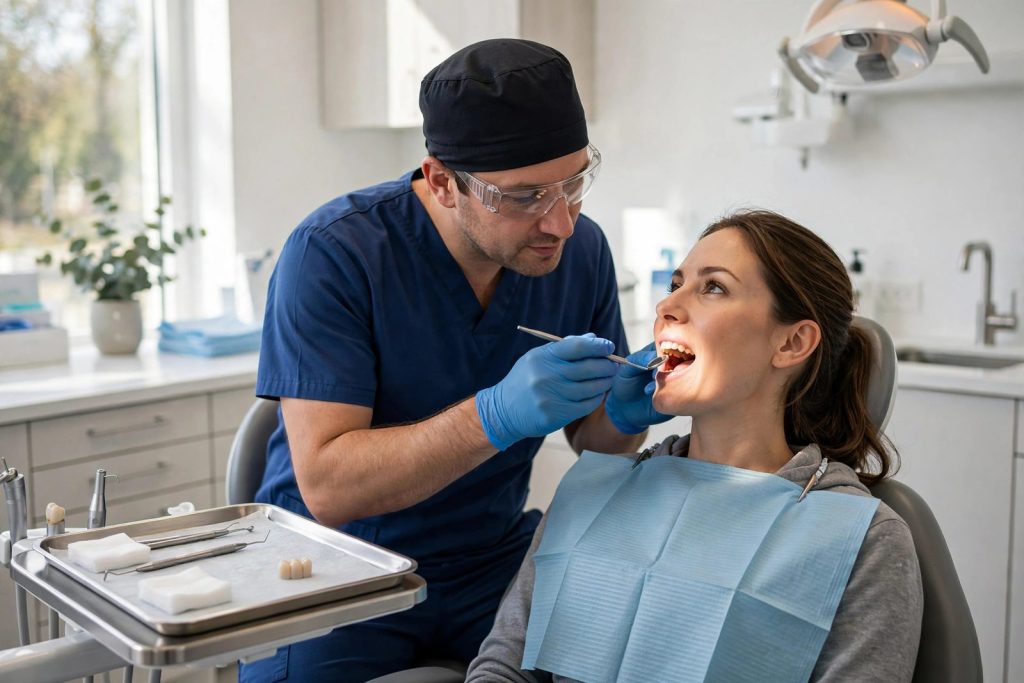
Your dental crown came off, and you are wondering what to do next. In Orangeville, contacting your dental office is the first step toward checking the crown and tooth.
If a dental crown came off while you were eating or brushing, you are not alone — it is one of the most common reasons patients call us between visits.
You notice a gap where your crown used to be, or feel something move while eating. The first thought is often, “Can it just be put back?” Sometimes a dentist can reuse a crown, but that decision requires checking both the crown and the tooth beneath it.
If this happens in Orangeville, contact your dental office and explain what changed. You do not need to know why it happened before asking for an assessment.
Questions to ask after a dental crown came off
When booking, tell the team if you will be travelling or cannot attend the first suggested appointment. Ask for instructions that apply while you wait and for the symptoms that should change that plan. If you are given written advice, keep it with the crown container and your appointment details. At the visit, ask whether the proposed repair completes treatment or whether another restoration is planned; the answer should be specific to your tooth.
Give the office a clear description
Say whether the crown is loose, has come off completely, or has broken. Mention pain, swelling, bleeding, or a sharp edge. If the crown is already out, keep it in a clean container and bring it to the appointment. Do not keep a detached crown loose in your mouth.
Tell the office whether it is a temporary crown, a crown on a natural tooth, or an implant crown, if you know. If you are unsure, say so; guessing is not necessary.
Why an examination comes before a repair plan
The dentist needs to assess the remaining tooth, the crown’s condition, and the fit. The appropriate next step may be different if there is damaged tooth structure or a problem with the crown itself.
Our dental crowns in Orangeville page describes the treatment. The ADA’s crown information explains the role of a crown in protecting or restoring a tooth.
Prepare before the visit
Bring these details
- The crown, if you have it.
- When you first noticed the change.
- Whether the tooth hurts at rest or when eating.
- Any recent treatment to that tooth and your medication list.
Avoid home repair
Do not use household glue or try to file the tooth. Contact the office for instructions before attempting to replace the crown yourself. Avoid chewing directly on the affected tooth while you wait for advice, and ask how to keep the area clean.
If the discomfort is severe or you have swelling, explain that when you call. Our emergency dental care page provides clinic information. Trouble breathing or swallowing requires immediate emergency medical care.
Ask about the plan beyond the first visit
Before leaving, ask whether the repair is temporary or definitive, what to do if it changes again, and whether another appointment is needed. Write down the instructions if you think you may forget them later.
CDCP and crown-related care
CDCP includes eligible crown repairs; crowns require preauthorization. Confirm the proposed service and applicable requirements before treatment.
See U Smile’s CDCP information and Canada.ca coverage details.
Arrange an assessment in Orangeville
Contact U Smile Dentistry and explain that your crown is loose or has come off. The office can advise on the next step based on the symptoms you describe.
Frequently asked questions
Can the same crown be reused?
Possibly. The dentist must check the crown, its fit, and the supporting tooth before deciding.
Should I bring the crown with me?
Yes, if you have it. Keep it in a clean container and bring it to your appointment.
Is household glue safe for a crown?
No. Do not use household glue in your mouth; seek dental advice.
What if there is no pain?
A lack of pain does not establish that the tooth is protected. Contact the office for an assessment.
Does an implant crown need the same repair?
Not necessarily. Tell the dentist if the crown is supported by an implant; its components need appropriate assessment.
What symptoms should I mention first?
Tell the office about severe pain, swelling, bleeding, or breathing or swallowing problems. Breathing or swallowing difficulty requires emergency medical care.